



managing knee osteoarthritis
Tips for managing knee osteoarthritis and joint pain
Although any of our joints can be troubled by osteoarthritis, the knee is one of the most likely joints to be affected.1 Knee pain can affect everyday activities like walking or climbing stairs,2 and it’s important to find ways to manage it. Medical guidelines recommend that the best way to manage your pain is through a combination of self-help measures.1-4
1. Exercise more
It may seem counterintuitive to exercise when knee pain occurs, but experts recommend exercise as the first step in managing the pain.1,2 There are three types of exercise that can help:
- Strengthening. Strengthening exercises keep the muscles surrounding the knee joint strong, helping to support and protect it.1,3 Read the article Exercises to Help Strengthen Your Joints for more information.
- Flexibility. This type of exercise increases mobility.1 There are specific exercises that can help improve flexibility, and it may be worthwhile taking up hobbies like T’ai Chi4 and yoga to stay limber.
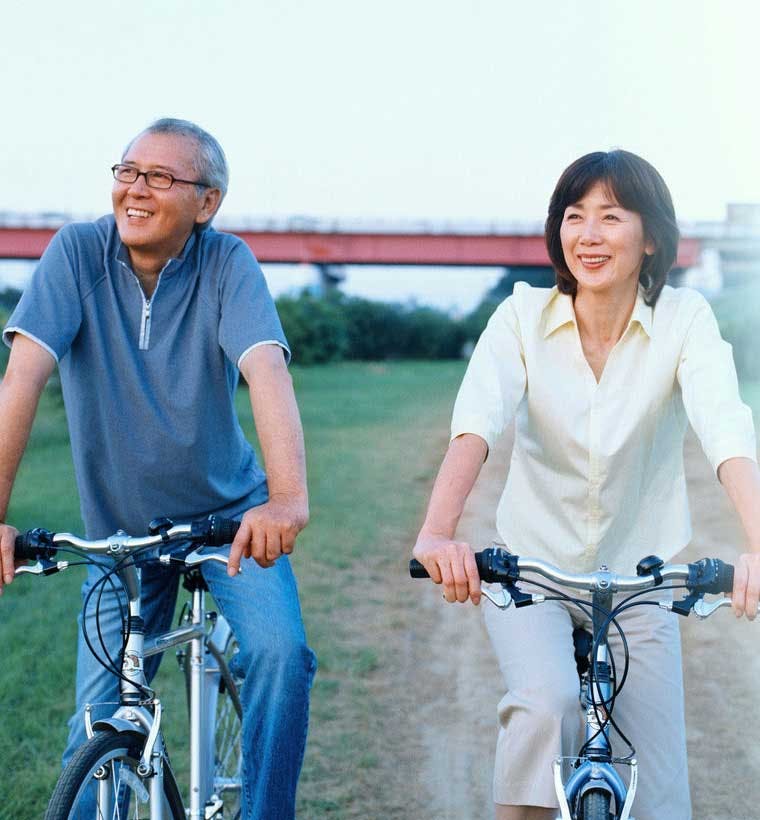
- Aerobic. To improve overall fitness, try aerobic exercises. Take care not to do exercises that could do further damage to the knee, such as jogging. Instead try walking or swimming. Even when walking try to avoid walking up or down steep hills as this can put extra strain on the knee. Stick to flat areas.5 Before starting any exercises, speak to a doctor, as they may be able to help create a personal training program.
2. Pace yourself
It’s important to recognize that you may need to learn to pace yourself more when doing your daily activities,1,2 as otherwise there is a risk that you’ll overdo things and cause more damage to your knee. It might take time and a bit of practice getting the balance right between doing and taking the regular rests your knee needs.
3. Stay in shape
Extra weight can place extra stress on the knee joint. Research shows that being overweight increases the chances of developing osteoarthritis of the knee.6 More specifically, for every 10 pounds of weight you gain, you increase the risk of knee osteoarthritis by 40%.6 The opposite is also true: lose ten pounds and the risks reduce by 40%. Medical guidelines all recommend losing weight as one of the key measures to ease knee pain.1-4
4. Manage the pain
Alongside exercise and weight loss, taking a pain reliever may also help. Medical guidelines worldwide recommend paracetamol as the analgesic to use first in relieving osteoarthritis knee pain.1-4 Paracetamol can be taken up to the maximum dose (4 g/day) to help keep pain under control.2,4
Other common treatments include non-steroidal anti-inflammatory tablets (NSAID) and topical NSAID which can be applied directly to the knee.1-4
Only use pain relievers as directed and follow the product label at all times.
5. Wear the right footwear
The right shoes can make a real difference. Experts recommend shock-absorbing shoes and insoles.1,2 Choose shoes with low heels that lace up and provide support for the feet and avoid high heels and sandals.5
6. Try hot and cold remedies
Applying hot packs or patches or ice packs to the knee is recommended as an add-on to other measures.1,2
7. Support the knee
Knee braces are recommended as an additional way of supporting the joint.1,2,4 These can help reduce pain, make the knee feel more stable and also reduce the risk of the knee ‘giving way.’
8. Go electric
Transcutaneous electrical nerve stimulation (TENS) can also be used.1,3,4 TENS machines work by sending small electrical impulses into the nerves in the skin, helping to block pain signals.
References
- National Collaborating Centre for Chronic Conditions. Osteoarthritis: national clinical guideline for care and management in adults. London: Royal College of Physicians, 2008. Available at: http://www.nice.org.uk/CG059fullguideline.
- Zhang W, et al. OARSI recommendations for the management of hip and knee osteoarthritis, Part II: OARSI evidence-based, expert consensus guidelines. Osteoarthritis Cartilage, 2008; 16: 137−162. Available at: http://www.oarsi.org/pdfs/oarsi_recommendations_for_management_of
_hip_and_knee_oa.pdf - Jordan KM, et all. EULAR recommendations 2003: an evidence based approcah to the management of knee osteoarthritis: Report of a Task Force of the Standing Committee for International Clinical Studies Including Therapeutic Trials (ESCISIT). Rheum Dis, 2003; 62: 1145−1155. Available at: http://ard.bmjjournals.com/cgi/content/full/62/12/1145.
- The Royal Australian College of General Practitioners. Guideline for the non-surgical management of hip and knee osteoarthritis. July 2009. Available at: http://www.nhmrc.gov.au/_files_nhmrc/file/publications/synopses/cp117-hip-knee-osteoarthritis.pdf
- American Arthritis Society. Practical tips for osteoarthritis of the knee. Available at: http://www.americanarthritis.org/portal/loader.php?seite=practical_tips_for_knee_oa. Accessed August 2010.
- Felson DT, et al. Risk factors for incident radiographic knee osteoarthritis in the elderly: the Framingham Study. Arthritis Rheum, 1997; 40: 728-733. Available at: http://www.ncbi.nlm.nih.gov/pubmed/9125257.

