
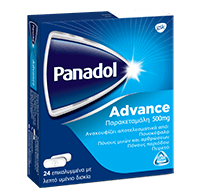
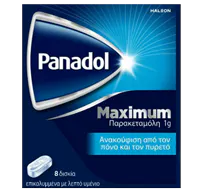


Panadol Advance Δισκία
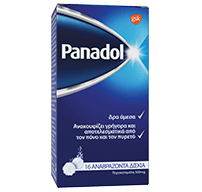
Panadol Αναβράζοντα δισκία
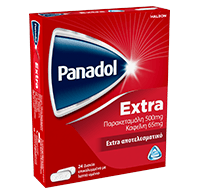
Panadol Extra Δισκία
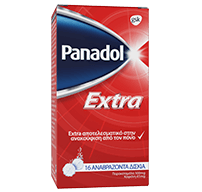
Panadol Extra Αναβράζοντα Δισκία
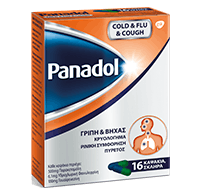
Panadol Cold & Flu & Cough
Σκληρά καψάκια
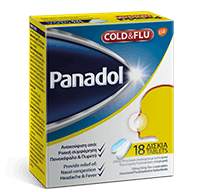
Panadol Cold & Flu
Δισκία
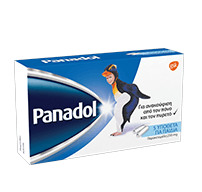
Panadol Υπόθετα
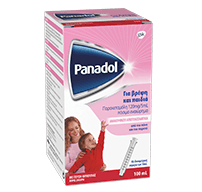
Panadol Πόσιμο Εναιώρημα
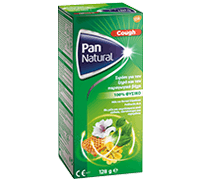
Σιρόπι PanNatural Για Το Βήχα
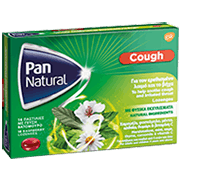
Παστίλιες PanNatural Για Το Βήχα & Τον Πονόλαιμο
Συγκρίνω (0/5)
- Μορφή
- Ηλικία
- Δραστικά συστατικά
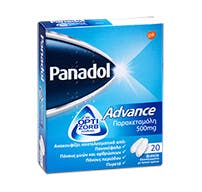
- Δισκία επικαλυμμένα με λεπτό υμένιο
- Ενήλικες και παιδιά άνω των 6 ετών
- Κάθε δισκίο περιέχει 500mg παρακεταμόλης
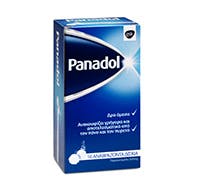
- Αναβράζοντα δισκία
- Ενήλικες και παιδιά άνω των 6 ετών
- Κάθε αναβράζον δισκίο περιέχει 500mg παρακεταμόλης
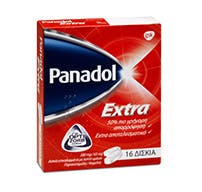
- Δισκία επικαλυμμένα με λεπτό υμένιο
- Ενδείκνυται σε ενήλικες, συμπεριλαμβανομένων των ηλικιωμένων, και παιδιά άνω των 12 ετών
- Κάθε δισκίο περιέχει 500mg παρακεταμόλης και 65mg καφεΐνης
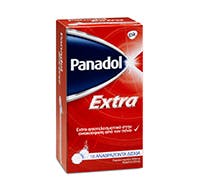
Panadol Extra
Αναβράζοντα Δισκία
- Αναβράζοντα δισκία
- Ενδείκνυται σε ενήλικες, συμπεριλαμβανομένων των ηλικιωμένων, και παιδιά άνω των 12 ετών
- Κάθε αναβράζον δισκίο περιέχει 500mg παρακεταμόλης και 65mg καφεΐνης
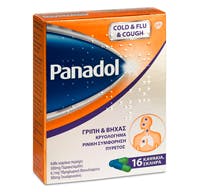
Panadol Cold & Flu & Cough
Σκληρά καψάκια
- Σκληρά καψάκια
- Ενήλικες, ηλικιωμένοι και έφηβοι ηλικίας 16 ετών και άνω, που ζυγίζουν 50 κιλά και άνω
- Κάθε καψάκιο περιέχει 500mg παρακεταμόλης, 6,1mg υδροχλωρικής φαινυλεφρίνης και 100mg γουαϊφενεσίνης.
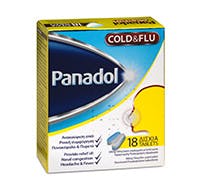
- Δισκία επικαλυμμένα με λεπτό υμένιο
- Ενήλικες, συμπεριλαμβανομένων των ηλικιωμένων, και έφηβοι ηλικίας 12 έως 18 ετών
- Κάθε δισκίο περιέχει 500mg παρακεταμόλης και 30mg υδροχλωρικής ψευδοεφεδρίνης.
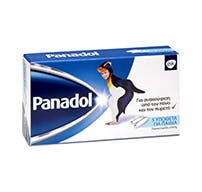
- Υπόθετα
- Παιδιά ηλικίας 1 έτους και άνω
- Κάθε υπόθετο Panadol περιέχει 250mg παρακεταμόλης.
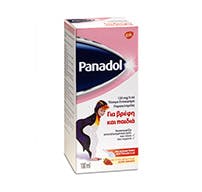
- Πόσιμο διάλυμα
- Βρέφη και παιδιά από 3 μηνών και άνω.
• Βρέφη κάτω των 3 μηνών μόνον μετά από τη συμβουλή του γιατρού - 5ml πόσιμου εναιωρήματος Panadol περιέχουν 120mg παρακεταμόλης.
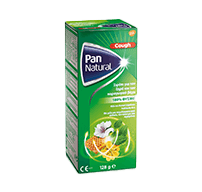
Panadol
Σιρόπι PanNatural Για Το Βήχα
- Σιρόπι
- Βρέφη και παιδιά από 3 μηνών και άνω.
• Βρέφη κάτω των 3 μηνών μόνον μετά από τη συμβουλή του γιατρού - 5ml πόσιμου εναιωρήματος Panadol περιέχουν 120mg παρακεταμόλης.
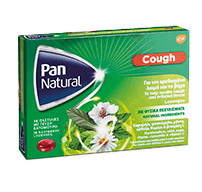
Panadol
Σιρόπι PanNatural Για Το Βήχα
- Πόσιμο διάλυμα
- Βρέφη και παιδιά από 3 μηνών και άνω.
• Βρέφη κάτω των 3 μηνών μόνον μετά από τη συμβουλή του γιατρού - 5ml πόσιμου εναιωρήματος Panadol περιέχουν 120mg παρακεταμόλης.
Ελαχιστοποίηση


UP CLOSE WITH COUGHS
No one likes coughing, but the act of coughing actually has a purpose – to clear the throat and breathing passage of foreign particles and excessive secretions such as mucus.1
In this article, we’ll cover the causes, diagnosis and treatments for different coughs.
BLAME VIRUSES
Most coughs are caused by viruses, but can be caused by bacteria.2-3 Coughs caused by viruses usually clear up on their own, and can be easily relieved by anti-cough or multi-symptom products.4 Coughs caused by bacteria can result in complications, which may require medical attention.2-3
A cough is a symptom of most acute respiratory infections. This includes infections of the upper respiratory tract, which are more common, and those of the lower respiratory tract, which tend to be more serious.2
Medicines for upper respiratory tract infections can offer relief from symptoms. Lower respiratory tract infections, such as pneumonia and bronchitis are more serious, and require more medical attention.2
Most acute coughs are caused by upper respiratory tract infections or conditions such as postnasal drip, chronic obstructive pulmonary disease (COPD) or pneumonia. Chronic coughs are most commonly caused by infections like bronchitis, or conditions like postnasal drip or gastroesophageal reflux disorder (GERD). Also, following an acute respiratory infection, the airways can become more responsive. This too can lead to a chronic cough.5
In children, acute coughs are generally caused by a virus affecting the upper respiratory tract, whereas chronic coughs may be caused by conditions such as asthma, GERD or postnasal drip.6
CLEARING THE COUGH
There are different ways to treat a cough depending on the type of cough and its cause.

Medicine
In most cases, coughs caused by a viral infection can be treated by anti-cough and multi-symptoms products,4 such as Panadol Cough and Cold*.
There are two common approaches to relieve a cough:
- Cough suppressants, such as dextromethorphan, which reduce the urge to cough can be used to relieve a dry cough (without mucus).7
- Expectorants, such as guaifenesin, which help to thin the mucus blocking the airways and make it easier to cough up, can be used to relieve a ‘wet’ cough (with mucus).7

Home remedies
For those who like to use home remedies, honey is a popular choice. Honey soothes the throat, resulting in less irritation and possibly less coughing.
However, honey must not be given to children under 1 year old.2

Avoid triggers
If you have allergies or asthma, remove allergens from your home, and use air conditioning to filter the air during pollen season.8 Avoid smoking or breathing second-hand smoke as this can make your cough worse.9
*For more detailed information, please refer to the local product labelling or leaflet. In case of doubt, please seek medical advice. Your pharmacist or doctor can help advise on the most appropriate treatments for you. If your symptoms persist or worsen, you should consult your doctor.
HOW PANADOL HELPS
Over-the-counter cold and flu medicines such as Panadol Cold & Flu* can relieve your cough, help you rest easier and aid recovery.
Panadol Cough and Cold* has a multi-ingredient formula that relieves symptoms of cold and flu, with an emphasis on coughs. It contains:
Paracetamol for pain-relieving and fever-reducing actions.
Phenylephrine hydrochloride, a decongestant to relieve nasal congestion.
Guaifenesin, an expectorant for chesty coughs, or
Dextromethorphan for cough relief.
Note:
Suppressants, or medicines that reduce coughing, are not recommended for some ailments, such as bronchitis.
*For more detailed information, please refer to the local product labelling or leaflet. In case of doubt, please seek medical advice. Your pharmacist or doctor can help advise on the most appropriate treatments for you. If your symptoms persist or worsen, you should consult your doctor.
TIME TO SEE THE DOC IF...
Coughing varies in severity and under certain circumstances may require you to consult your doctor. If you are suffering from any of the following, you should seek medical attention:7,9-11

1. Your cough doesn't improve after a few days, or gets worse even with medication.

2. You are coughing up thick, greenish-yellow phlegm, or wheezing.

3. You have a fever that doesn't go away or refuses to come down despite medication, or you have a fever with a rash.
The flu may also affect you with severe symptoms. Here are some, but not all of the indications that you should see a doctor: 10
The flu may also affect you with severe symptoms. Here are some, but not all of the indications that you should see a doctor: 10

1. You have difficulty breathing, feel short of breath, or are experiencing pain in the chest or abdomen.

2. Your symptoms (which may include cough, fever, headache or nasal congestion) persist or get worse.

3. You have severe or persistent vomiting

4. You experience sudden dizziness or confusion.
RECOMMENDED PANADOL FOR COUGH
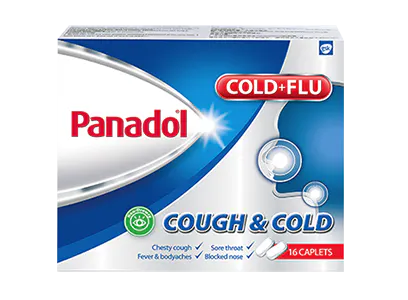
Panadol Cough and Cold*
Take only as directed and always refer to label before use.
Do not take with any other products that contain the same active ingredient(s). Taking products containing any of the same active ingredients together may lead to an overdose. Immediate medical advice should be sought in the event of an overdose, even if you feel well.
*For more detailed information, please refer to the local product labelling or leaflet. In case of doubt, please seek medical advice. Your pharmacist or doctor can help advise on the most appropriate treatments for you. If your symptoms persist or worsen, you should consult your doctor.
REFERENCES
1. Irwin RS, et al. Chest 2014;146(4):885–9.
2. World Health Organization. Cough and Cold Remedies for the Treatment of Acute Respiratory Infections in Young Children. Geneva, Switzerland: World Health Organization, 2001.
3. Eccles R, Weber O (Eds). Common Cold. Basel, Switzerland: Birkhäuser Verlag, 2009.
4. Eccles R, et al. Open J Resp Dis 2014;4:73–82.
5. MSD Manual. Cough in Adults. Available at: https://www.msdmanuals.com/professional/pulmonary-disorders/symptoms-of-pulmonary-disorders/cough-in-adults. Last accessed: 20 March 2018.
6. MSD Manual. Cough in Children. Available at: https://www.msdmanuals.com/professional/pediatrics/symptoms-in-infants-and-children/cough-in-children. Last accessed: 20 March 2018.
7. MSD Manual (Consumer version). Cough in Adults. Available at: https://www.msdmanuals.com/home/lung-and-airway-disorders/symptoms-of-lung-disorders/cough-in-adults#v1142961. Last accessed: 20 March 2018.
8. Mayo Clinic. Asthma. Available at: https://www.mayoclinic.org/diseases-conditions/asthma/symptoms-causes/syc-20369653. Last accessed: 16 April 2018.
9. Mayo Clinic. Cough. https://www.mayoclinic.org/symptoms/cough/basics/when-to-see-doctor/sym-20050846. Last accessed: 20 March 2018.
10. Centers for Disease Control and Prevention. The Flu: What to do if you get sick. Available at: https://www.cdc.gov/flu/takingcare.htm. Last accessed: 20 March 2018.
11. Mayo Clinic. Fever treatment: Quick guide to treating a fever. Available at: https://www.mayoclinic.org/diseases-conditions/fever/in-depth/fever/art-20050997. Last accessed: 29 March 2018.