
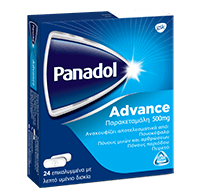
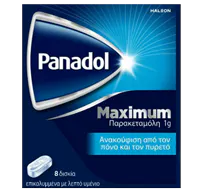
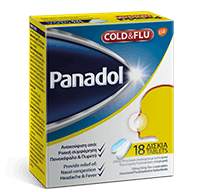
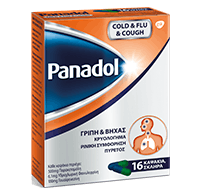
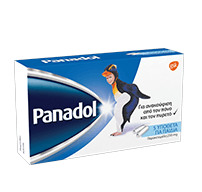
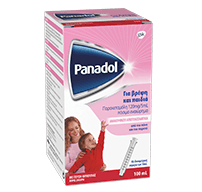


Panadol Advance Δισκία
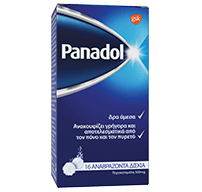
Panadol Αναβράζοντα δισκία
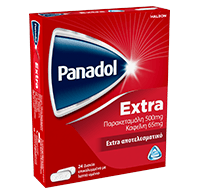
Panadol Extra Δισκία
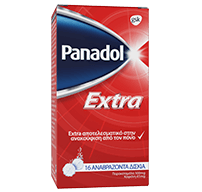
Panadol Extra Αναβράζοντα Δισκία
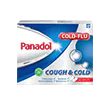
Panadol Cold & Flu & Cough
Σκληρά καψάκια
Panadol Cold & Flu
Δισκία
Panadol Υπόθετα
Panadol Πόσιμο Εναιώρημα
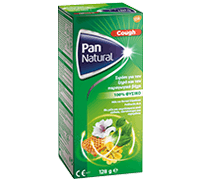
Σιρόπι PanNatural Για Το Βήχα
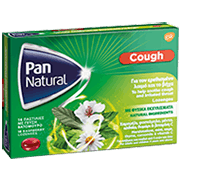
Παστίλιες PanNatural Για Το Βήχα & Τον Πονόλαιμο
Συγκρίνω (0/5)
- Μορφή
- Ηλικία
- Δραστικά συστατικά
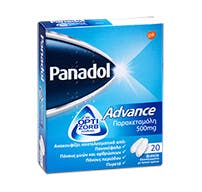
- Δισκία επικαλυμμένα με λεπτό υμένιο
- Ενήλικες και παιδιά άνω των 6 ετών
- Κάθε δισκίο περιέχει 500mg παρακεταμόλης
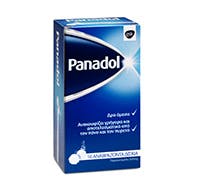
- Αναβράζοντα δισκία
- Ενήλικες και παιδιά άνω των 6 ετών
- Κάθε αναβράζον δισκίο περιέχει 500mg παρακεταμόλης
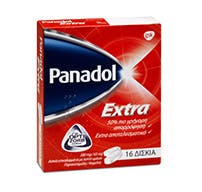
- Δισκία επικαλυμμένα με λεπτό υμένιο
- Ενδείκνυται σε ενήλικες, συμπεριλαμβανομένων των ηλικιωμένων, και παιδιά άνω των 12 ετών
- Κάθε δισκίο περιέχει 500mg παρακεταμόλης και 65mg καφεΐνης
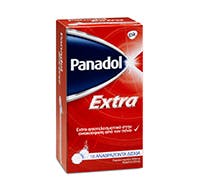
Panadol Extra
Αναβράζοντα Δισκία
- Αναβράζοντα δισκία
- Ενδείκνυται σε ενήλικες, συμπεριλαμβανομένων των ηλικιωμένων, και παιδιά άνω των 12 ετών
- Κάθε αναβράζον δισκίο περιέχει 500mg παρακεταμόλης και 65mg καφεΐνης
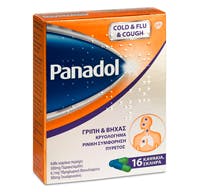
Panadol Cold & Flu & Cough
Σκληρά καψάκια
- Σκληρά καψάκια
- Ενήλικες, ηλικιωμένοι και έφηβοι ηλικίας 16 ετών και άνω, που ζυγίζουν 50 κιλά και άνω
- Κάθε καψάκιο περιέχει 500mg παρακεταμόλης, 6,1mg υδροχλωρικής φαινυλεφρίνης και 100mg γουαϊφενεσίνης.
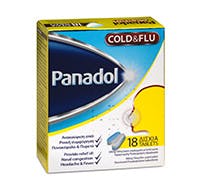
- Δισκία επικαλυμμένα με λεπτό υμένιο
- Ενήλικες, συμπεριλαμβανομένων των ηλικιωμένων, και έφηβοι ηλικίας 12 έως 18 ετών
- Κάθε δισκίο περιέχει 500mg παρακεταμόλης και 30mg υδροχλωρικής ψευδοεφεδρίνης.
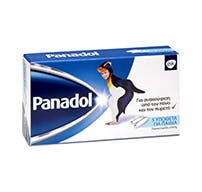
- Υπόθετα
- Παιδιά ηλικίας 1 έτους και άνω
- Κάθε υπόθετο Panadol περιέχει 250mg παρακεταμόλης.
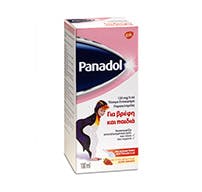
- Πόσιμο διάλυμα
- Βρέφη και παιδιά από 3 μηνών και άνω.
• Βρέφη κάτω των 3 μηνών μόνον μετά από τη συμβουλή του γιατρού - 5ml πόσιμου εναιωρήματος Panadol περιέχουν 120mg παρακεταμόλης.
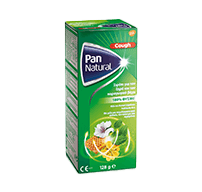
Panadol
Σιρόπι PanNatural Για Το Βήχα
- Σιρόπι
- Βρέφη και παιδιά από 3 μηνών και άνω.
• Βρέφη κάτω των 3 μηνών μόνον μετά από τη συμβουλή του γιατρού - 5ml πόσιμου εναιωρήματος Panadol περιέχουν 120mg παρακεταμόλης.
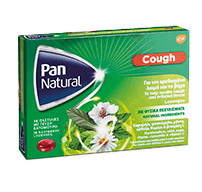
Panadol
Σιρόπι PanNatural Για Το Βήχα
- Πόσιμο διάλυμα
- Βρέφη και παιδιά από 3 μηνών και άνω.
• Βρέφη κάτω των 3 μηνών μόνον μετά από τη συμβουλή του γιατρού - 5ml πόσιμου εναιωρήματος Panadol περιέχουν 120mg παρακεταμόλης.
Ελαχιστοποίηση

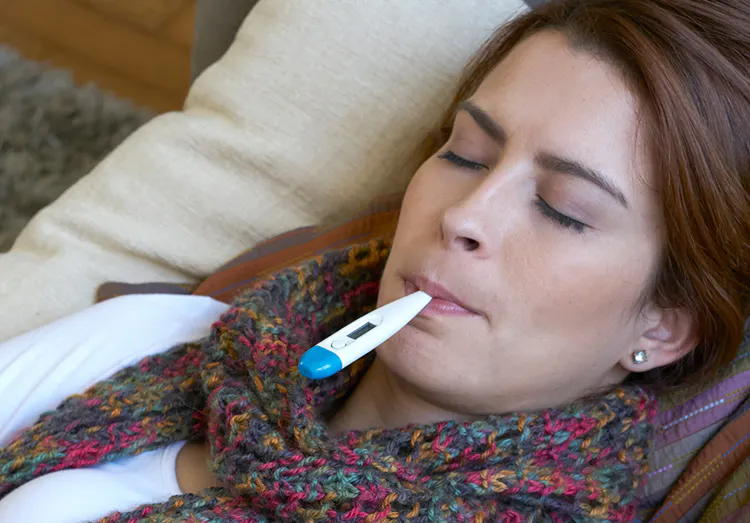
EVERYTHING YOU WANTED TO KNOW ABOUT FEVER
Fever comes in many forms. So, it’s always a good idea to learn how to assess an individual’s fever and understand when emergency care is needed.
In this article, we will cover the signs, solutions and things to look out for.
CAUSES OF FEVER
A fever is a temporary increase in your body temperature; it is often an indication that they may be an infection within your body.1
Fever is one of the body’s natural defences against viruses and bacteria that cannot live at higher temperatures.2
However, a fever can cause discomfort and this is the main reason to seek relief for a raised temperature.1
DIFFERENT GRADES OF FEVER
Fevers can range from low grade (mild) to high grade. Over-the-counter pain relievers or analgesics can reduce fever and ease discomfort associated with cold and flu.1
Fevers of 39.4°C (103°F) or higher demand prompt medical attention.1 This may be lower in children. If you are in any doubt you should seek medical advice. When a fever doesn't respond to treatment, or when it's accompanied with small red skin spots, neck stiffness or extreme sensitivity to light contact your doctor right away.
Severity grading scale oral temperature (adults)3:

Mild (Grade 1): 38.0–38.4°C
Moderate (Grade 2): 38.5–38.9°C
Severe (Grade 3): 39.0–40.0°C
Potentially Life Threatening (Grade 4): >40°C.
DIFFERENT GRADES OF FEVER
Fevers can range from low grade (mild) to high grade. Over-the-counter pain relievers or analgesics can reduce fever and ease discomfort associated with cold and flu.1
Fevers of 39.4°C (103°F) or higher demand prompt medical attention.1 This may be lower in children. If you are in any doubt you should seek medical advice. When a fever doesn't respond to treatment, or when it's accompanied with small red skin spots, neck stiffness or extreme sensitivity to light contact your doctor right away.
Severity grading scale oral temperature (adults)3:
Mild (Grade 1): 38.0–38.4°C
Moderate (Grade 2): 38.5–38.9°C
Severe (Grade 3): 39.0–40.0°C
Potentially Life Threatening (Grade 4): >40°C.
SIGNS AND SYMPTOMS OF A FEVER
The signs and symptoms of a fever may include1:

Sweating

Headache

Chills and shivering

Muscle aches

Loss of appetite

Irritability

Dehydration

General weakness
Sweating
Headache
Chills and shivering
Muscle aches
Loss of appetite
Irritability
Dehydration
General weakness
MANAGING YOUR FEVER
A fever is a temporary increase in your body temperature, often due to an illness. Having a fever is a sign that something out of the ordinary is going on in your body.1
Here are some tips to help you manage your fever:
- Drink plenty of fluids. Fever can cause fluid loss and dehydration, so it is important to keep drinking.4
- Try to rest, rest will help your body to recover. As activity can raise your temperature further, it is important to get plenty of rest.4
- Stay cool. Dressing in light clothing and keeping the room temperature cool will help your body not get too hot. Bedclothes can also be kept to a minimal by using a sheet or light blanket.4,5
- Other ways to ease the discomfort associated with fever include sponging the body with slightly warm water;5 however, this does not help reduce a fever.6
- Take fever-reducing medication.4-6 If your fever is associated with cold and flu symptoms, and is causing you discomfort, take Panadol Cold & Flu*.
*For more detailed information, please refer to the local product labelling or leaflet. In case of doubt, please seek medical advice. Your pharmacist or doctor can help advise on the most appropriate treatments for you. If your symptoms persist or worsen, you should consult your doctor.
HOW PANADOL COLD & FLU HELPS
Over-the-counter cold and flu medicines such as Panadol Cold & Flu* can ease the fever and help you get back on your feet. Fever relief can help you rest easier and in turn aid recovery. One of its core ingredients is paracetamol, which helps to reset the body’s thermostat and lowers raised temperatures.
Panadol Cold & Flu* caplets contain the active ingredients paracetamol and phenylephrine hydrochloride (HCl). Paracetamol works to reduce pain messages from getting through to the brain and also helps reduce fever.
If your fever is accompanied by other symptoms, such as congested nose or cough, consider taking specific products such as Panadol Cold & Flu SinusMAX* or Panadol Cold & Flu*, which contain active ingredients that will relieve these conditions.
*For more detailed information, please refer to the local product labelling or leaflet. In case of doubt, please seek medical advice. Your pharmacist or doctor can help advise on the most appropriate treatments for you. If your symptoms persist or worsen, you should consult your doctor.
WHEN TO SEE A DOCTOR
A fever by itself may not be a cause for alarm, or a reason to call a doctor. Yet, there are some circumstances when you should seek medical advice:1,7
1. High fever.
A fever of 39.4°C (103°F) or higher in adults demands prompt medical attention (a lower temperature may be cause for concern in children or babies, call your doctor if you are unsure)
2. Severe headache

3. Unusual skin rash, especially if the rash worsens rapidly

4. Unusual sensitivity to bright light

5. Stiff neck and pain when you bend your head forward

6. Mental confusion

7. Persistent vomiting

8. Difficulty breathing or chest pain

9. Abdominal pain or pain when urinating

10. Your symptoms (which may include fever, headache, nasal congestion or cough) persist or get worse
WHEN TO SEE A DOCTOR
A fever is a temporary increase in your body temperature, often due to an illness. Having a fever is a sign that something out of the ordinary is going on in your body.1
1. High fever.
A fever of 39.4°C (103°F) or higher in adults demands prompt medical attention (a lower temperature may be cause for concern in children or babies, call your doctor if you are unsure)
2. Severe headache
3. Unusual skin rash, especially if the rash worsens rapidly
4. Unusual sensitivity to bright light
5. Stiff neck and pain when you bend your head forward
6. Mental confusion
7. Persistent vomiting
8. Difficulty breathing or chest pain
9. Abdominal pain or pain when urinating
10. Your symptoms (which may include fever, headache, nasal congestion or cough) persist or get worse
FIND THE RIGHT FORMULA FOR YOU
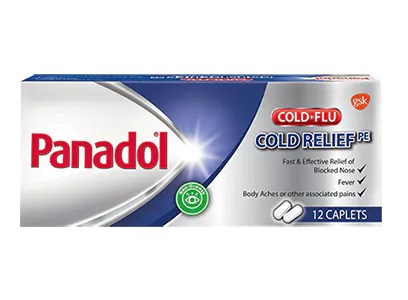
Panadol Cold Relief PE*
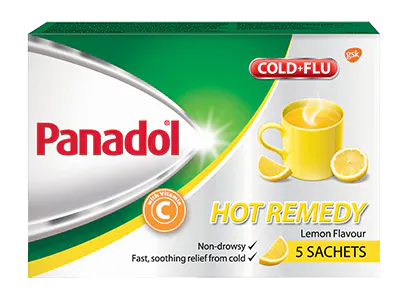
Panadol Hot Remedy*
Take only as directed and always refer to label before use.
Do not take with any other products that contain the same active ingredient(s). Taking products containing any of the same active ingredients together may lead to an overdose. Immediate medical advice should be sought in the event of an overdose, even if you feel well.
*For more detailed information, please refer to the local product labelling or leaflet. In case of doubt, please seek medical advice. Your pharmacist or doctor can help advise on the most appropriate treatments for you. If your symptoms persist or worsen, you should consult your doctor.
REFERENCES
1. Mayo Clinic. Fever: Symptoms and causes. Available at: https://www.mayoclinic.org/diseases-conditions/fever/symptoms-causes/syc-20352759. Last accessed: 20 March 2018.
2. Ogoina D. J Inf Pub Health 2011;4:108–24.
3. FDA. Guidance for industry. Available at: https://www.fda.gov/downloads/BiologicsBloodVaccines/ucm091977. Last accessed: 23 March 2018.
4. Mayo Clinic. Fever: Diagnosis and Treatment. Available at: https://www.mayoclinic.org/diseases-conditions/fever/diagnosis-treatment/drc-20352764. Last accessed: 20 March 2018.
5. PubMed Health. Fever in children: How can you reduce a fever? Available at: https://www.ncbi.nlm.nih.gov/pubmedhealth/PMH0072637/. Last accessed: 23 March 2018.
6. NHS UK. fever in children. Available at: https://www.nhs.uk/conditions/fever-in-children/#things-you-can-try. Last accessed: 23 March 2018.
7. Mayo Clinic. Fever treatment: Quick guide to treating a fever. Available at: https://www.mayoclinic.org/diseases-conditions/fever/in-depth/fever/art-20050997. Last accessed: 29 March 2018.